 MaanavVision
How the AI Revolution is Drinking the World’s Water
Every Time You Chat with AI, It Drinks Water
The hidden environmental cost of a world running on artificial intelligence
⏱ ~8 min read • #Environment #AI #Water #GlobalSouth #India
There’s a cost to artificial intelligence that nobody puts on the invoice.
You don’t see it when ChatGPT writes you an essay. You don’t feel it when a cloud server stores your photos. But somewhere, right now, a building the size of several football fields is humming with thousands of servers — and those servers are drinking water. Enormous amounts of it.
A conversation with ChatGPT involving around 20 to 50 messages can use up to half a litre of water. Generate an AI image, and that’s roughly 29 millilitres. Ask an AI to make a video? That single request can consume up to 4.1 litres of water — just for one video.
Multiply that by billions of daily users worldwide, and you begin to understand why the United Nations is worried.
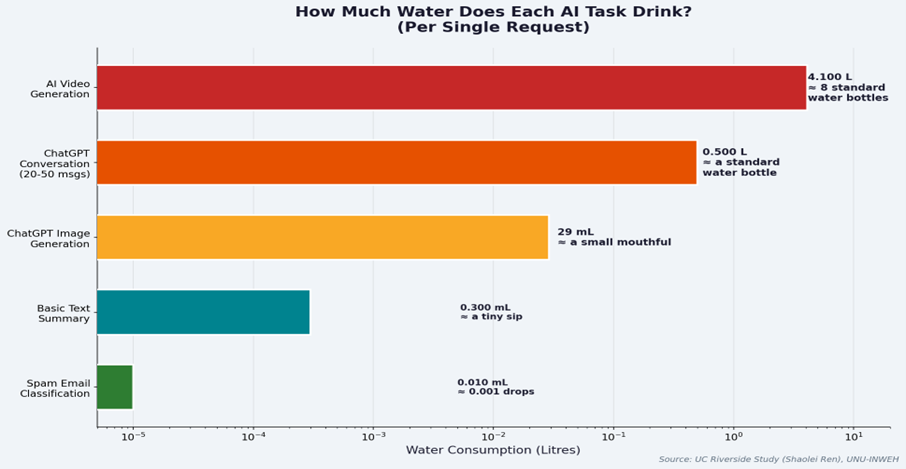
Figure 1: Water consumed per AI task — from a simple text query to an AI-generated video
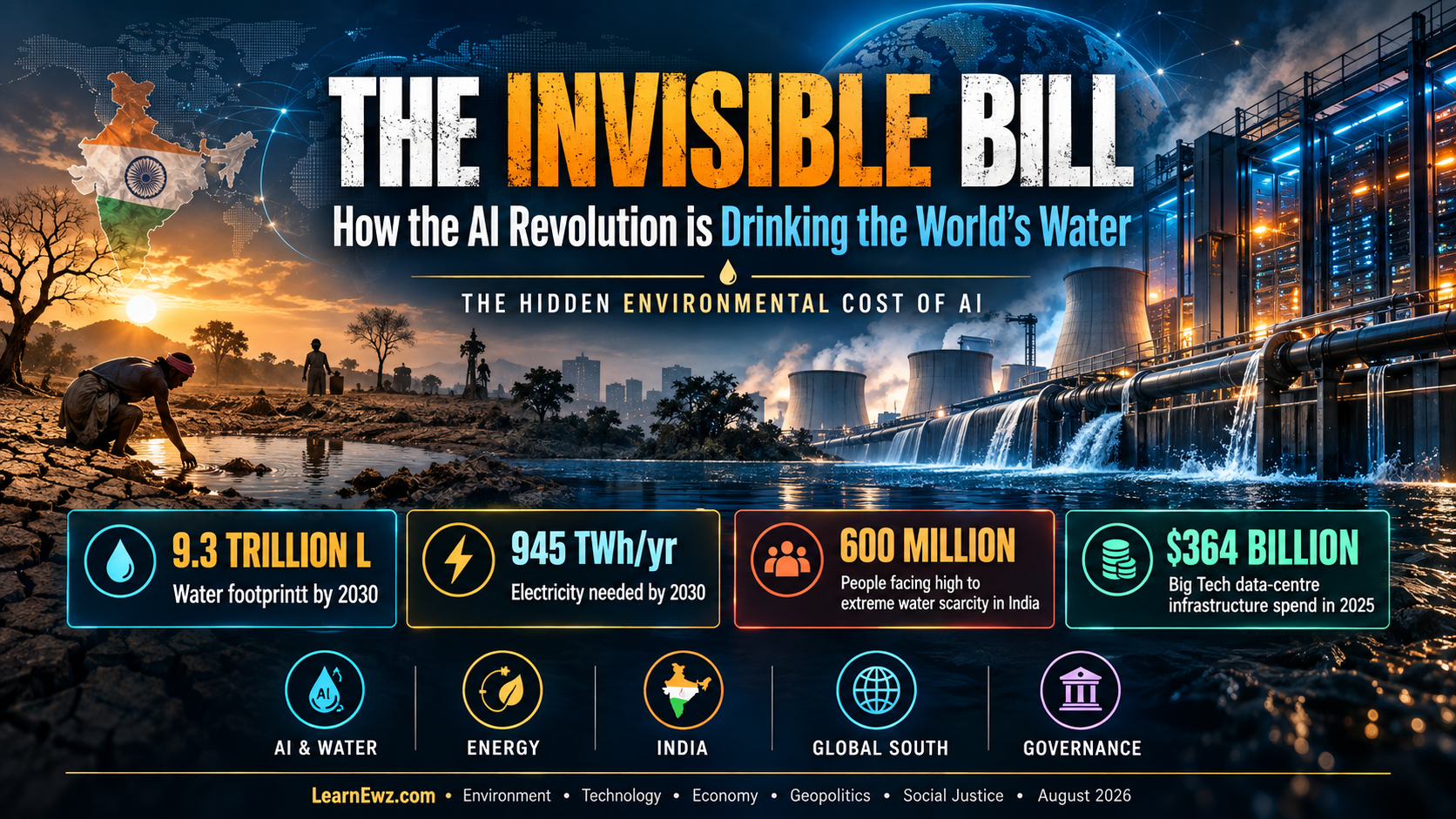
A UN report found that in 2025, the world’s data centres had a combined water footprint of 4.5 trillion litres — enough to satisfy Chennai’s water needs for about 8.8 years. By 2030, that number is expected to hit 9.3 trillion litres — roughly the annual basic water needs of 1.3 billion people in Sub-Saharan Africa.
And this is just the water story. There’s also electricity. By 2030, data centres are expected to consume 945 terawatt-hours of electricity annually — nearly triple the combined yearly power use of Pakistan, Bangladesh, and Nigeria, three countries that together have over 650 million people.
This is the invisible bill of the AI revolution.
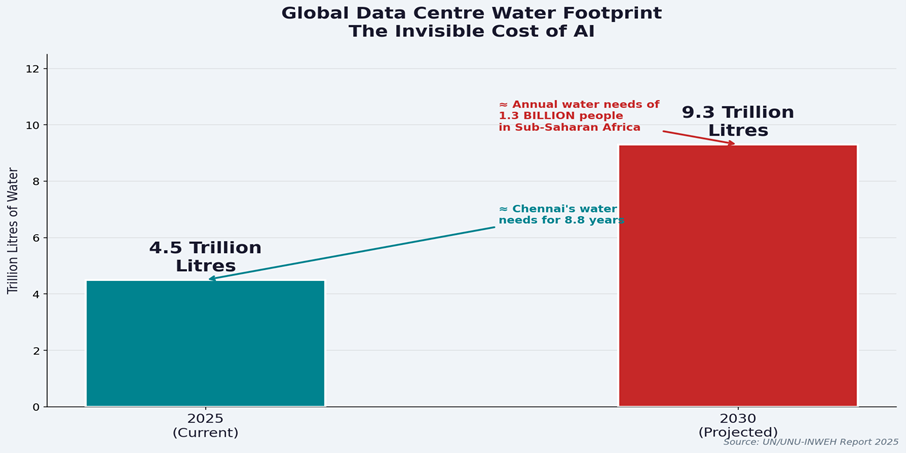
Figure 2: Global data centre water footprint — 2025 vs 2030 projection (UN/UNU-INWEH)
The Men Building This World
To understand why data centres are multiplying so fast, follow the money — and the ambition.
In 2025, the four biggest tech companies — Google, Meta, Amazon, and Microsoft — spent $364 billion on data centre infrastructure. That’s nearly India’s entire annual central government expenditure. The race isn’t just about profit. It’s about who controls the infrastructure of the future.
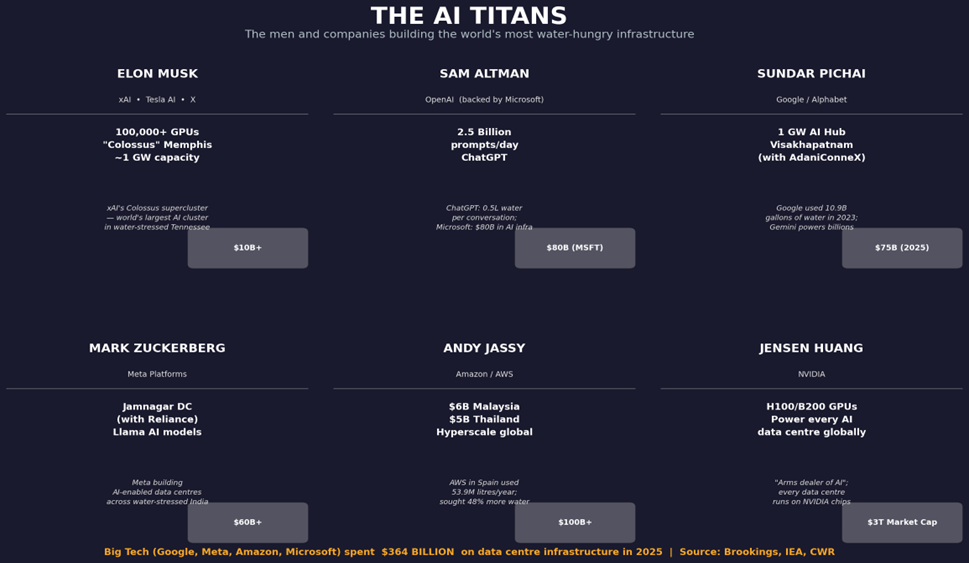
Figure 3: The AI Titans — key players building the world's most water-hungry infrastructure
Elon Musk’s xAI built “Colossus” — a supercluster of over 100,000 NVIDIA H100 GPUs in Memphis, Tennessee — in just 122 days. It’s the world’s largest AI training cluster. Memphis sits in a water-stressed region, yet the facility requires enormous cooling water. Sam Altman’s OpenAI processes 2.5 billion ChatGPT prompts every day, backed by Microsoft’s $80 billion AI infrastructure bet.
Sundar Pichai’s Google used 10.9 billion gallons of water globally in 2023 and is now building a 1 GW AI hub in Visakhapatnam, India in partnership with AdaniConneX. Mark Zuckerberg’s Meta is building an AI-enabled data centre in Jamnagar, Gujarat, partnering with Reliance Industries. And Jensen Huang’s NVIDIA — the man who makes the chips that power all of this — sits at a $3 trillion company valuation. The “arms dealer” of the AI race.
The United States: AI Superpower, Grid Under Stress
America runs more AI than any other country. Its data centres currently consume about 4.4% of all US electricity, and that share is expected to jump to somewhere between 6.7% and 12% by 2028. By 2030, energy demand from AI infrastructure alone could be 130% higher than today.
The problem? The US power grid wasn’t built for this. Getting permission to build a new power plant or transmission line can take over a decade. In Northern Virginia, which hosts the highest concentration of data centres on Earth, some projects are facing grid connection queues of 7 to 13 years. The world’s AI ambition is outrunning America’s ability to actually power it.
Tech giants are already looking for unusual solutions. Microsoft is restarting the Three Mile Island nuclear plant — yes, the one famous for America’s worst nuclear accident in 1979. Nuclear power is gaining traction fast, because solar and wind alone can’t keep up with demand that is growing 30% annually.
🏥 China: Racing Ahead, Running Dry
China is the world’s second-largest data centre market, accounting for roughly 25% of global consumption. In 2023 and 2024 alone, it announced over 500 new data centre projects. But China’s data centres sit in a precarious position.
According to a China Water Risk analysis, 41% of China’s data centre racks are in drought-prone regions, 28% are in flood-prone zones, and 56% are in coastal areas vulnerable to rising sea levels. China’s data centres currently consume roughly 1.3 billion cubic metres of water per year — nearly double the annual household water use of Tianjin, a city of 13.7 million people.
Under an AI explosion scenario, water consumption could surge 20 times over by 2030 — equivalent to the water needs of over 500 million people. China’s own “Eastern Data, Western Computing” policy, meant to move centres away from water-stressed east, backfired: 9 of 14 hub regions selected already face high to extremely high water stress.
And the energy paradox is real: China installed 357 GW of renewable capacity in the first half of 2025 — but simultaneously commissioned 21 GW of coal, the highest since 2016, largely to power its AI boom.
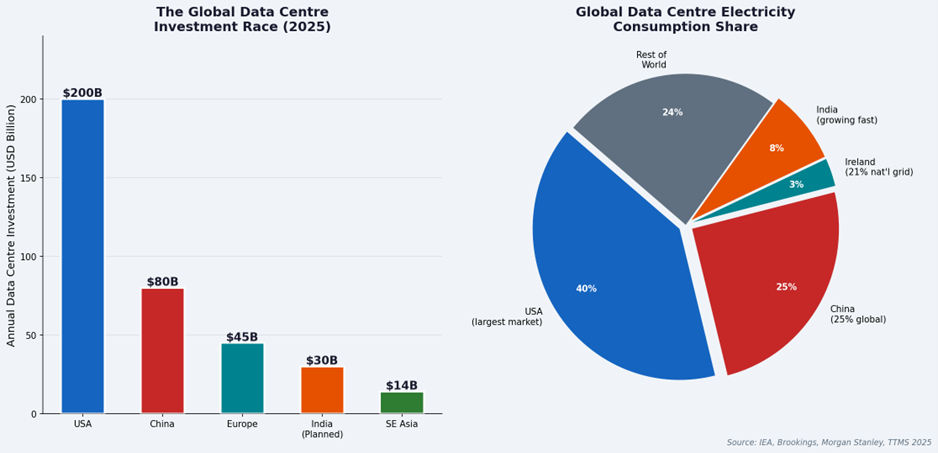
Figure 4: The global data centre investment race — who's spending what and consuming how much
India: Digital Ambition Meets Water Bankruptcy
India tells a particularly sharp story — because the stakes here are uniquely high.
The country extracts more groundwater than any other nation on earth, accounting for roughly 25% of all global groundwater withdrawals. It has 18% of the world’s population, but only 4% of its freshwater. Already, 600 million Indians face high to extreme water scarcity.
Into this already stressed system, India is now adding a massive data centre boom. The country’s capacity has grown from about 375 MW in 2020 to 1,500 MW in 2025, with projections pointing to 13,560 MW by 2031-32. Every megawatt of data centre capacity requires approximately 2.5 crore litres of water per year. At 1,500 MW, India’s data centres are already consuming roughly 37.5 billion litres annually. Morgan Stanley estimates that global AI data centre water demand could rise elevenfold by 2028.
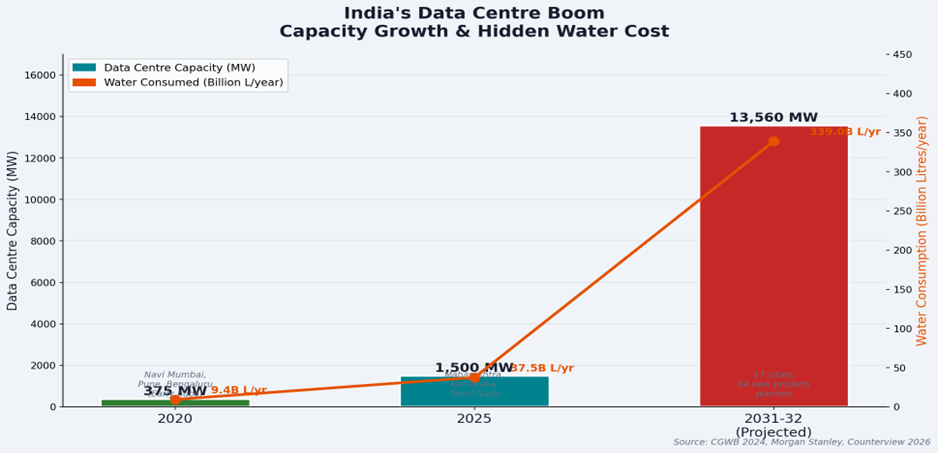
Figure 5: India's data centre capacity growth and hidden water cost projection
The geography of this expansion makes it worse. The biggest hubs are in Maharashtra, Karnataka, Tamil Nadu, and Telangana — all states that already experience severe water stress. Mumbai, where over 71% of residents receive water for less than 4 hours a day, is set to host 45% of India’s planned data centre capacity. In Bengaluru, water already has to be pumped across significant elevations from the Cauvery River — a river at the centre of a decade-long interstate dispute.
In Gautam Buddha Nagar, Uttar Pradesh — which hosts at least 17 data centres — groundwater extraction is already at 104.79% of recharge capacity. The district is drawing down its water table every year. And yet, the state’s 2026 data centre policy promises another 2 GW of capacity worth ₹6 lakh crore.
Protests have erupted in Visakhapatnam over the Google-AdaniConneX data centre, and in Thane against Amazon’s hyperscale project. But protests alone won’t rewrite policy.
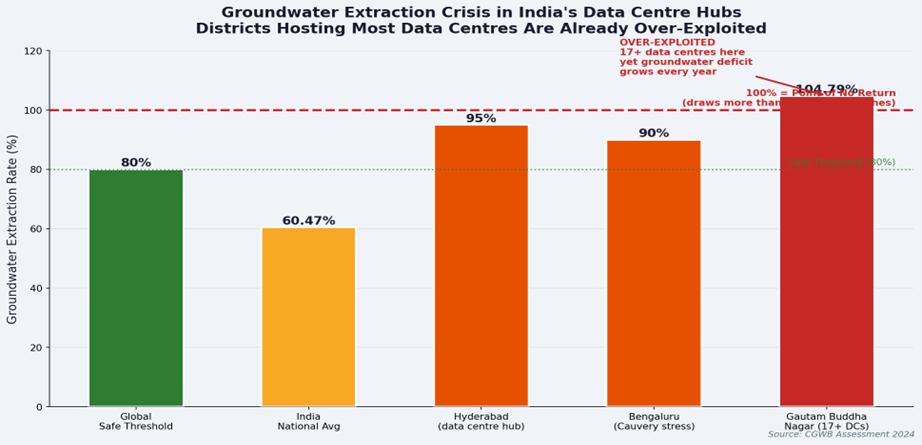
Figure 6: Groundwater extraction rates in India's major data centre districts — already over-exploited
Europe: Regulation Awakens, But Slowly
Europe is home to some of the world’s most aggressive climate legislation, but it is only beginning to seriously address the resource costs of AI infrastructure. In Ireland, data centres consumed 21% of all national electricity in 2023 — more than all urban homes combined.
The Irish grid operator paused approvals for new data centres until 2028. In Frankfurt, data centre demand has reached 42% of local electricity load. In Dublin, it’s nearly 80%. The Netherlands imposed a nine-month moratorium on hyperscale permits.
In Spain’s Aragón region, Amazon Web Services data centres use up to 53.9 million litres of water annually — and when audited, Amazon admitted it had been underestimating its usage and sought a 48% increase in water permits. The EU AI Act now requires energy consumption reporting for large AI models, but water disclosure remains largely voluntary.
Southeast Asia and Africa: The New Frontiers — and the New Risks
As land, power, and political pressure mount in the US and Europe, tech companies are flooding into Southeast Asia and Africa — often to regions with weaker regulations and less organised public resistance. In Southeast Asia, data centre investment reached $13.71 billion in 2024 and is projected to hit $30.47 billion by 2030.
Bangladesh tells the starkest story: it is receiving $290 million in data centre investments while over 40% of its population lacks safe drinking water. Dhaka’s water table is falling by more than 3 metres per year in some areas, and farmers who once struck water at 150 feet now have to drill to 300 feet. Despite Bangladesh’s own Water Act prioritising drinking water over industrial use, permits are routinely granted in violation of that hierarchy.
In Brazil, Scala is building an “AI City” with 4.75 GW of capacity in Eldorado do Sul — classified as high water stress risk. Indigenous communities, Landless Workers’ Movement settlements, and organic farmers are reporting compacted, drought-cracked soil and disappearing water sources. Tribal councils have unanimously rejected related dam proposals. Construction continues regardless.
Analysts have begun calling this pattern “digital colonialism” — Western corporations extract resources from Global South nations while local communities absorb the environmental costs.
Who Bears the Cost? The Most Vulnerable, Always.
Across every country, every region, every continent, the pattern is the same: the benefits of AI go to the educated, the connected, the wealthy — and the costs are borne by those least responsible for creating them.
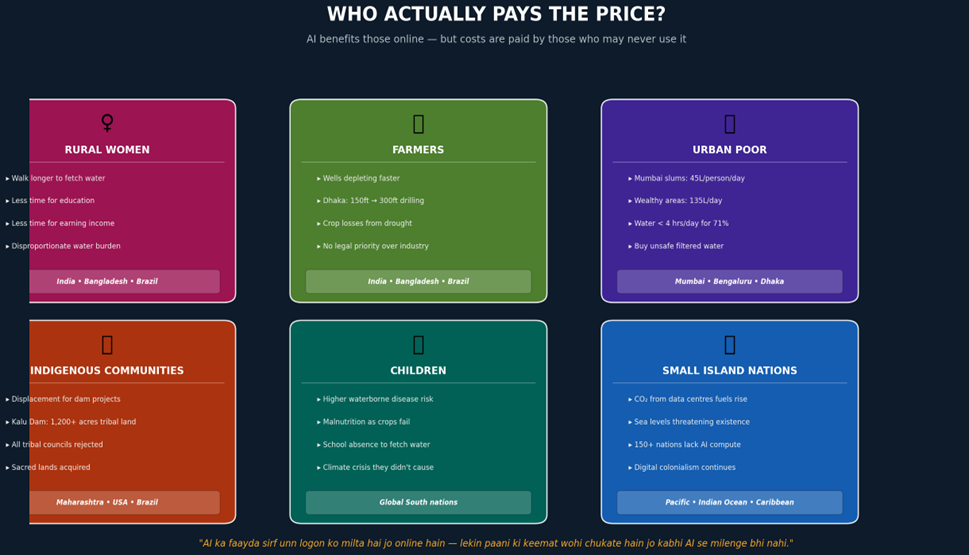
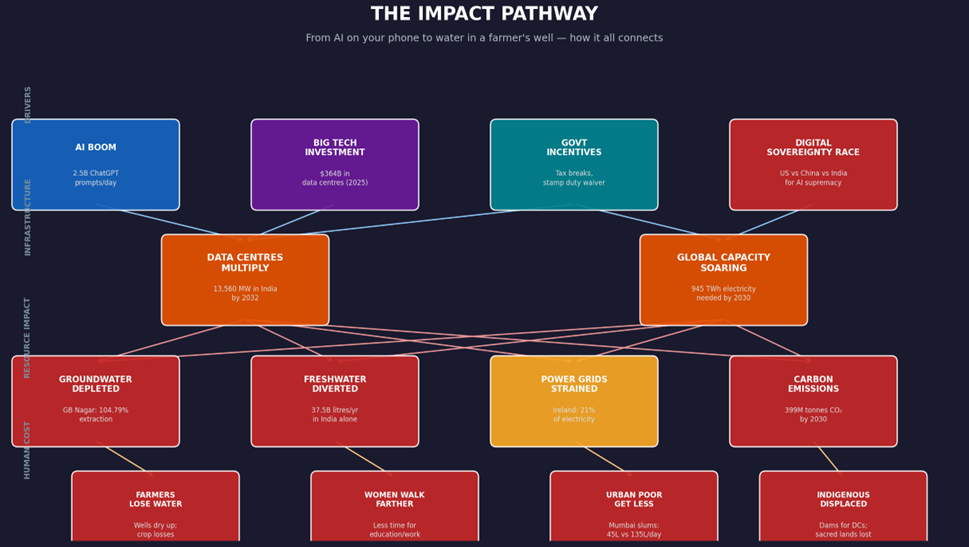
Figure 7: Who actually pays the price? The communities bearing the cost of AI's hidden bill
- Rural women . in India, Bangladesh, and Brazil walk longer distances to collect water as groundwater tables fall. Time spent fetching water is time not spent in school or earning income.
- Farmers watch their wells dry up as nearby data centres draw from the same aquifer. They have no legal recourse, because data centres are classified as industrial users with stronger permit priority.
- Slum dwellers in Mumbai get water for less than 4 hours a day — 45 litres per person — while wealthy neighbourhoods receive 135 litres. As overall demand rises, that gap only widens.
- Indigenous communities in the US, Brazil, and India face displacement for dam construction needed to supply new data centres, or find their sacred lands and water sources diverted without consent.
- Children in water-stressed regions face increased rates of waterborne disease, malnutrition, and reduced school attendance as families spend more time managing a crisis they didn’t cause.
- The cruel irony: these communities will be the least likely to ever use the AI systems drinking their water.
The Energy Emergency Nobody Is Talking About
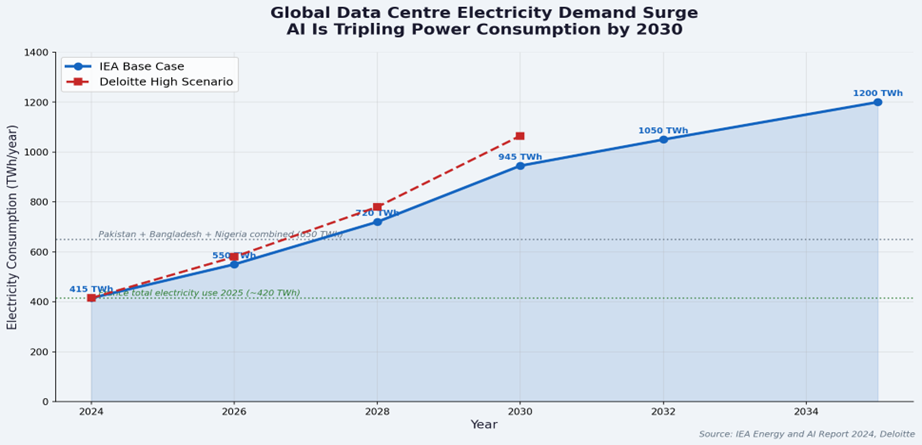
Figure 8: Global data centre electricity demand — IEA base case vs Deloitte high scenario through 2035
By 2030, data centres will need 945 TWh of electricity — triple the combined consumption of Pakistan, Bangladesh, and Nigeria. There’s a painful irony hiding in the numbers too: Google reduced the energy used per prompt by 33 times through efficiency improvements.
But its total energy consumption grew by 27% year-on-year. This is known as Jevons Paradox — when you make something more efficient, people use so much more of it that total consumption rises. Efficiency gains are being overwhelmed by demand growth of 30% annually.
Meanwhile, only 32 countries on earth host AI-specialised data centres. Over 150 countries — mostly in Africa, South Asia, and the Pacific — have no sovereign AI compute infrastructure at all. They are permanently dependent on technology built, owned, and controlled by others. Their data flows through someone else’s servers. Their digital futures are held in someone else’s buildings.
The One Fix Everyone Agrees On, But Nobody Is Doing
Experts across the UN, IEA, academic institutions, and civil society agree on one urgent step: mandatory disclosure.
Right now, most data centres don’t have to tell anyone how much water they use, where they source it from, or whether they’re drawing down a stressed aquifer.
No public dashboard. No annual report. No accountability. Shaolei Ren of UC Riverside, the researcher who first quantified ChatGPT’s water footprint, says what’s needed is simple: force data centres to publicly disclose monthly and peak water use, the source — potable, reclaimed, or groundwater — and whether the site is in a water-stressed zone.
The EU is moving in this direction. But globally, most frameworks remain voluntary. And voluntary means nothing gets disclosed unless it looks good.
Until that changes, the AI revolution will keep writing invisible bills — and handing them to people who never asked for the service.
“AI ka faayda sirf unn logon ko milta hai jo online hain — lekin paani ki keemat wohi chukate hain jo kabhi AI se milenge bhi nahi.”
📘 PREPARATION MODE
📘 STRUCTURED NOTES FOR ALL COMPETITIVE EXAMS
Hidden Environmental & Geopolitical Cost of AI and Digital Infrastructure
WHY IN NEWS
- UC Riverside study: A 20–50 exchange ChatGPT conversation consumes up to 0.5 litres of water (Shaolei Ren, 2024)
- UN/UNU-INWEH Report: Global data centres’ water footprint = 4.5 trillion litres (2025), projected 9.3 trillion litres by 2030
- IEA Energy and AI Report: Data centre electricity demand will reach 945 TWh by 2030 — triple the combined use of Pakistan + Bangladesh + Nigeria
- India’s data centre capacity: 375 MW (2020) → 1,500 MW (2025) → 13,560 MW projected by 2031-32
- CGWB 2024: India’s groundwater extraction at 60.47%; Gautam Buddha Nagar (home to 17+ data centres) at 104.79% — over-exploited
KEY REPORTS & SOURCES TO KNOW
| Report / Source | Key Finding |
|---|---|
| UC Riverside (Shaolei Ren) | 20–50 ChatGPT exchanges = up to 0.5 L water; single image = 29 mL; video = 4.1 L |
| UN/UNU-INWEH 2025 | 9.3 trillion litres water footprint by 2030; 945 TWh electricity; 399M tonnes CO₂ |
| IEA — Energy and AI 2024 | 945 TWh electricity by 2030; US AI energy demand up 130% by 2030 |
| China Water Risk (CWR) | China: 1.3B m³/year; AI explosion = 20× surge; 41% racks in drought zones |
| Morgan Stanley Estimate | Global AI data centre water demand could rise 11× by 2028 (1,068B litres) |
| Brookings Institution | Big Tech spent $364 billion on data centres in 2025 alone |
| CGWB Assessment 2024 | India: 60.47% extraction; GB Nagar: 104.79% (over-exploited); Hyderabad over-exploited |
COUNTRY-WISE ANALYSIS
🇺🇸 United States
| ECONOMIC | POLITICAL & SOCIAL |
|---|---|
| 4.4% of US electricity used by data centres (2023), rising to 6.7–12% by 2028 | Grid connection queues: 7–13 years in Northern Virginia |
| Big Tech spent $364 billion on data centre infrastructure in 2025 | AI treated as national security priority — but grid can’t keep up |
| Texas: $1B+ subsidies; Virginia: $732M in 2024 for data centres | Nuclear revival: Microsoft restarted Three Mile Island |
| AI demand growing 30% annually — outpacing grid expansion | Jevons Paradox: Google’s per-prompt energy fell 33× but total use grew 27% YoY |
🇨🇳 China
| ECONOMIC | ENVIRONMENTAL & POLITICAL |
|---|---|
| 25% of global data centre consumption | 41% racks in drought zones; 28% flood zones; 56% coastal zones |
| 500+ new projects announced 2023–24; 150+ operational by end-2024 | Current water use: 1.3B m³/year = 1.9× Tianjin city’s household use |
| Added 357 GW renewable capacity (H1 2025) — but also 21 GW coal | “Eastern Data, Western Computing”: 9 of 14 hubs still water-stressed |
| 75 GW new coal projects proposed — highest in a decade | AI explosion scenario by 2030: 20× water surge = 500M+ people’s needs |
🇮🇳 India
| ECONOMIC & INFRASTRUCTURE | WATER & SOCIAL IMPACT |
|---|---|
| Capacity: 375 MW → 1,500 MW (2025) → 13,560 MW (2032) | Each MW needs 2.5 crore litres/year → 37.5B L consumed annually at 1500 MW |
| 132 DCs operating; 84 new projects in 17 cities by 2029 | India: 25% of global groundwater extraction; only 4% of world’s freshwater |
| UP: ₹6 lakh crore investment target; AP: 100% GST + stamp duty exemption | GB Nagar: 104.79% extraction with 17+ DCs; Hyderabad: over-exploited |
| Adani Group: $100B investment in hyperscale DCs by 2035 | Mumbai: 71% of people get water <4 hrs/day; 45L vs 135L (slum vs wealthy) |
🇪🇺 European Union
- Ireland: 21% of national electricity from data centres (2023); grid paused approvals till 2028
- Frankfurt: 42% of local load; Dublin: ~80%; Netherlands: 9-month moratorium on hyperscale
- Spain (Aragón): AWS uses 53.9M L/yr; admitted underestimation; sought 48% more water permits
- EU AI Act: Mandatory energy reporting for large AI models — first binding step
- EU Energy Efficiency Directive: KPIs on water, energy, renewables for large data centres
🌏 Southeast Asia, Africa & Global South
- SE Asia investment: $13.71B (2024) → $30.47B (2030); Amazon: $6B Malaysia, $5B Thailand
- Bangladesh: $290M DC investment, but 40%+ population lacks safe drinking water; Dhaka water table falling 3m/year
- Brazil: Scala’s 4.75 GW “AI City” in Eldorado do Sul — high water stress; indigenous councils rejected related dams
- Pattern: “Digital Colonialism” — corporations relocate to regions with weaker regulations; communities bear the cost
- 150+ countries lack sovereign AI compute infrastructure — creating permanent digital dependency
IMPACT ON MOST VULNERABLE SECTIONS
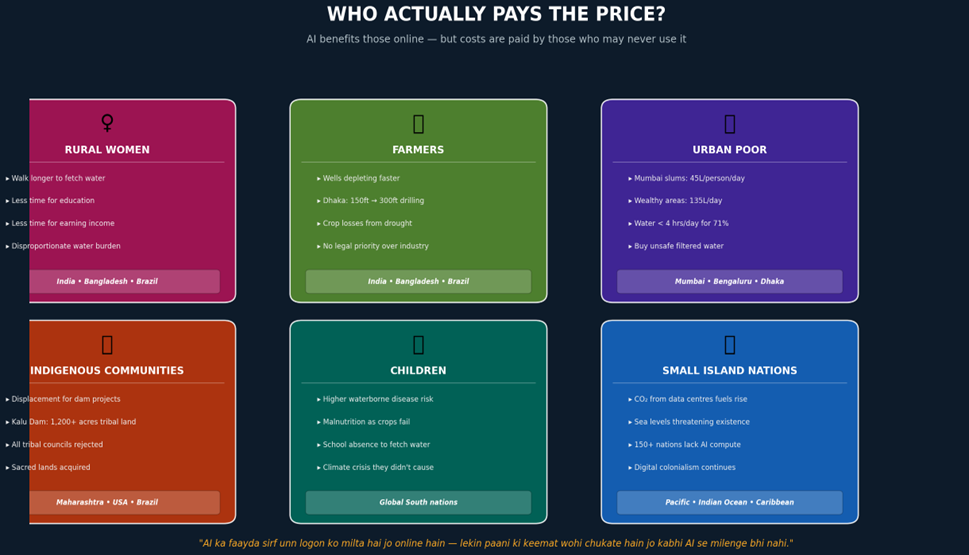
Figure 9: Holistic view of communities bearing the cost of the AI infrastructure boom
| Group | Impact | Region |
| Rural Women | Walk longer to fetch water; less time for education and income; primary burden falls on them | India, Bangladesh, Brazil |
| Farmers | Wells depleting (150ft → 300ft in Dhaka); crop failures; no legal priority over industrial water users | India, Bangladesh, Brazil |
| Urban Poor / Slum Dwellers | Mumbai: 45L/day vs 135L wealthy; water <4 hrs/day for 71%; buy unsafe filtered water | Mumbai, Bengaluru, Dhaka |
| Indigenous Communities | Displacement for dam projects (Kalu Dam: 1200+ acres tribal land); all tribal councils rejected | Maharashtra, USA, Brazil |
| Children | Waterborne disease, malnutrition, school absenteeism due to family water crisis they didn’t create | Global South |
| Small Island Nations | CO₂ from data centres accelerates sea level rise; 150+ nations lack sovereign AI compute | Pacific, Indian Ocean, Caribbean |
WAY FORWARD
- Mandatory Disclosure Norms: Monthly and peak water use, source (potable/reclaimed/groundwater), and water stress zone classification — binding, not voluntary
- Water-Sensitive Siting: Environmental and groundwater impact assessments before project approvals, especially in over-exploited zones
- Cooling Technology Shift: Promote closed-loop cooling, liquid immersion cooling, and treated wastewater reuse — commercially viable today
- Global Standards: Binding multilateral framework on data centre environmental reporting (analogous to financial reporting standards)
- Free, Prior, and Informed Consent (FPIC): Indigenous and local community rights must be respected before siting decisions
- Equitable Access Principle: Data centres in water-stressed regions must demonstrate water equity for local populations
- India-specific: Integrate with National Water Mission and CGWB groundwater management plans; mandatory state-level EIAs before DC approvals
KEY FACTS TO REMEMBER
| ChatGPT chat | 0.5 L water | Per 20–50 message conversation (UC Riverside) |
| 2030 water footprint | 9.3 trillion L | Annual basic water needs of 1.3 billion Sub-Saharan Africans |
| 2030 electricity | 945 TWh/yr | 3× Pakistan + Bangladesh + Nigeria combined (IEA) |
| India (2032) | 13,560 MW | From 375 MW in 2020; 37.5B litres water consumed now |
| China AI scenario | 20× water surge | By 2030 = water for 500M+ people (CWR Report) |
| Digital gap | 150+ countries | Lack sovereign AI compute infrastructure |
| AI nations | Only 32 | Countries host AI-specialised data centres globally |
CONNECT WITH OTHER TOPICS
- National Water Mission — one of 8 missions under National Action Plan on Climate Change (NAPCC)
- Central Ground Water Board (CGWB) — under Ministry of Jal Shakti; 2024 assessment key data
- EIA Notification 2006 — and ongoing debates over its revision and dilution
- India AI Mission / Digital India — India’s sovereign AI compute ambitions
- Jal Jeevan Mission — “Har Ghar Jal” — tension with data centre water demand /li>
- Jevons Paradox — efficiency gains overwhelmed by demand growth (AI context)
- Digital Colonialism — Global South dependence on Big Tech infrastructure
- UNFCCC / Paris Agreement — data centre carbon targets and energy transition
- Free, Prior, and Informed Consent (FPIC) — indigenous rights under UN DRIP
“AI ka faayda sirf unn logon ko milta hai jo online hain — lekin paani ki keemat wohi chukate hain jo kabhi AI se milenge bhi nahi.”
AI benefits only those who are online — but the water cost is paid by those who may never meet AI at all.