 MaanavVision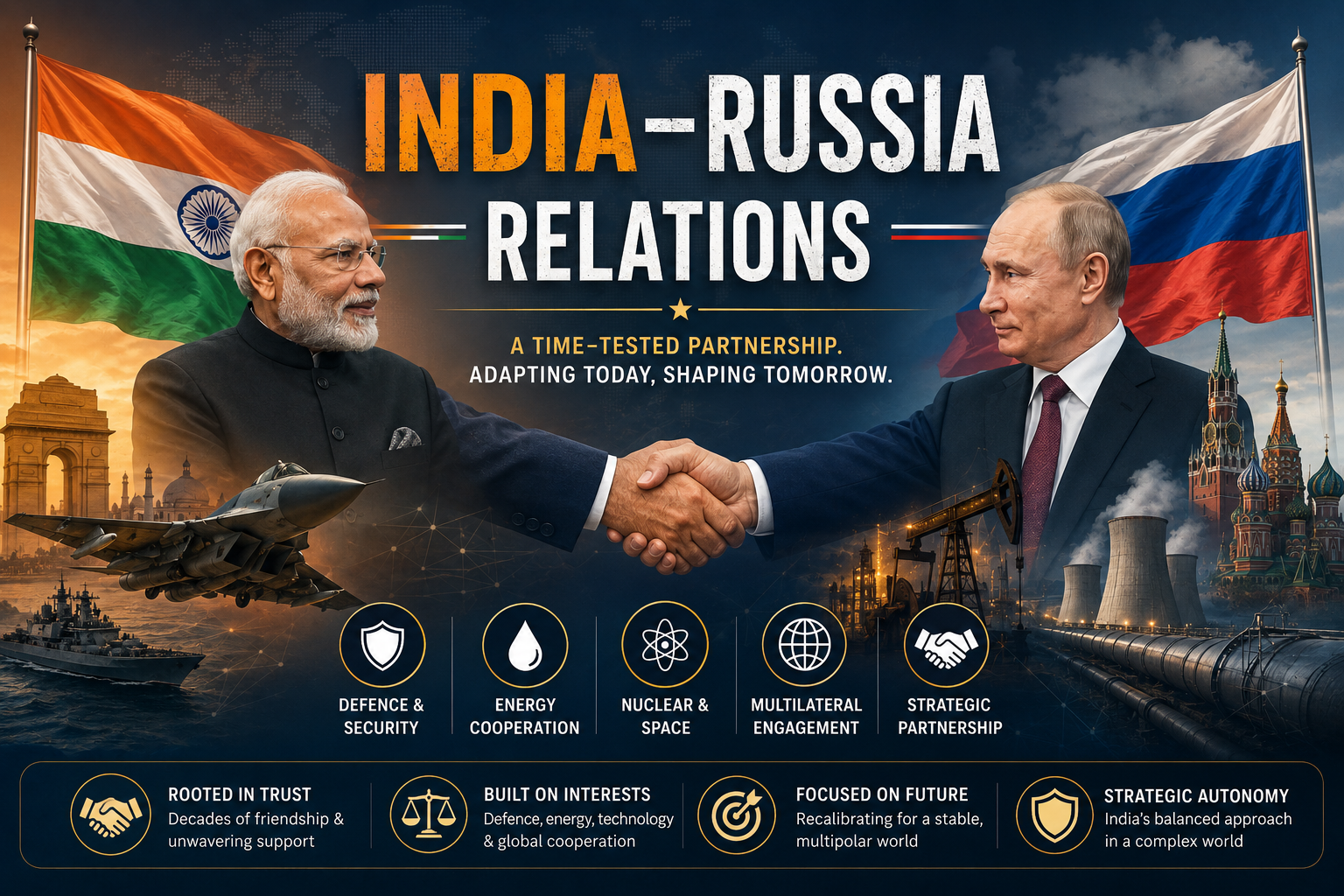
1. Hal filhal me ye log kyun charcha mein hai
- 1. At the invitation of the Prime Minister of India Shri Narendra Modi, the President of the Russian Federation, H.E. Mr. Vladimir Putin, paid a State visit to India on December 04-05, 2025 for the 23rd India-Russia Annual Summit. YAHAN SE JOINT STATEMENT DEKHO.
- 2. Continued high-level political engagement between India and Russia despite the Ukraine conflict.
- 3. India’s defence and energy cooperation with Russia continued amid Western sanctions.
- 4. India abstained from UN resolutions critical of Russia, reiterating:
• Dialogue
• Diplomacy
• Peaceful resolution - 5. Russia sought to:
• Deepen defence cooperation
• Expand energy exports to India - 6. Growing discourse on whether India–Russia relations are weakening or merely transforming.
DOSTI = DEFENCE ”
India–Russia relations are undergoing a phase of recalibration, not rupture.
2. HISTORICAL BACKGROUND
- 2.1 Cold War Phase :
★ Soviet Union was India’s most reliable strategic partner
★ Support included :
▪ Defence supplies
▪ Diplomatic backing on Kashmir
▪ UNSC vetoes in India’s favour - 2.2 Post-Cold War Transition :
★ Collapse of USSR (1991)
★ Russia’s initial inward focus
★ India diversified partnerships but retained Russia as a key partner - 2.3 Special and Privileged Strategic Partnership :
★ India and Russia elevated relations to:
▪ “Special and Privileged Strategic Partnership”
★ Annual summits institutionalised cooperation
3. CORE PILLARS OF INDIA–RUSSIA RELATIONS
3.1 DEFENCE & SECURITY COOPERATION :
-
- Scale of Defence Cooperation
★ Russia accounts for:
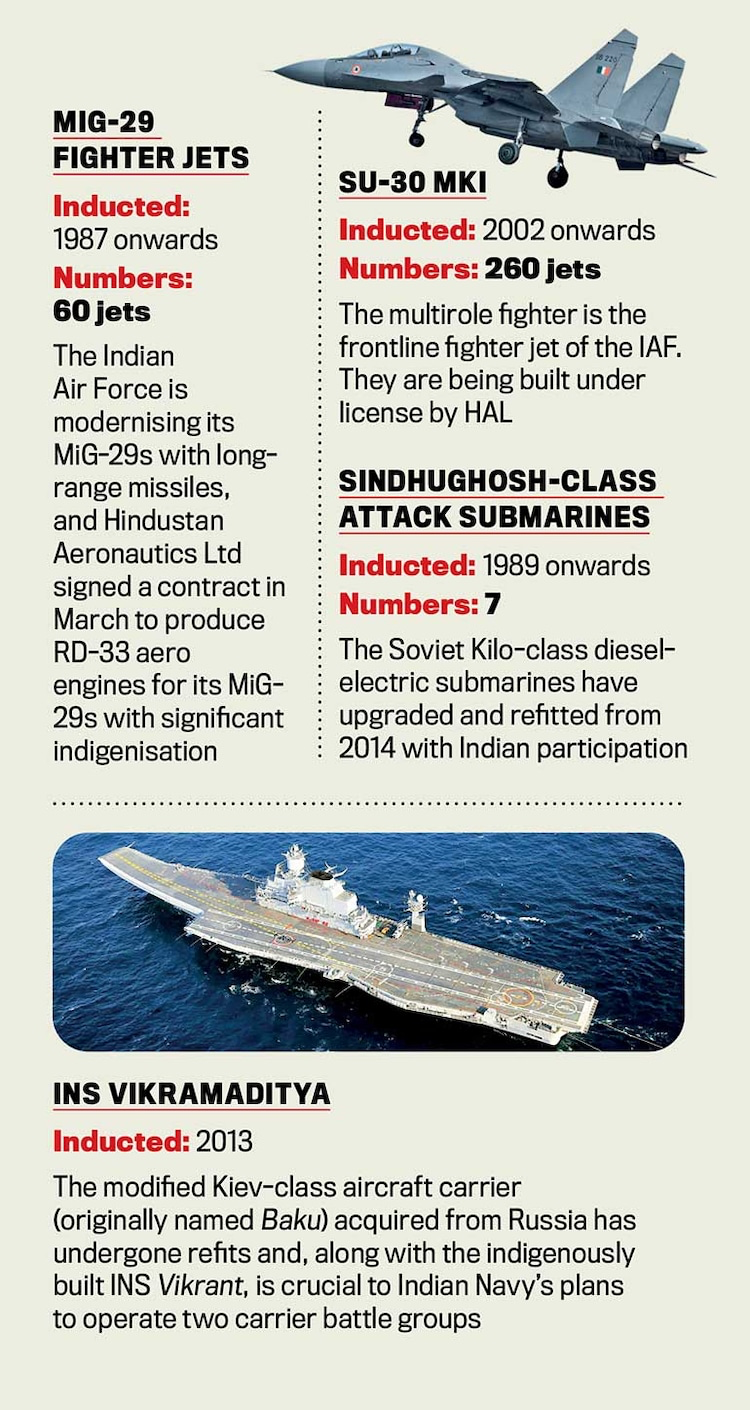
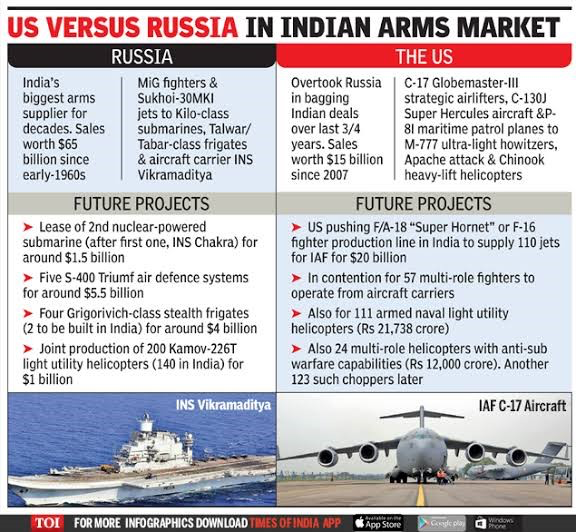
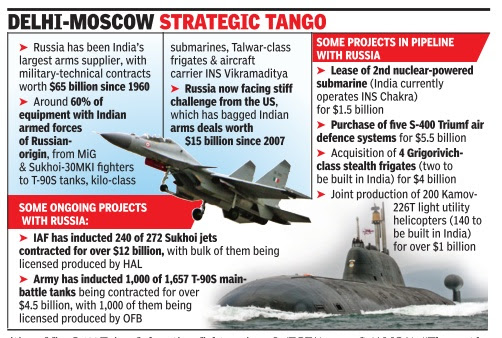
▪ ~60–70% of India’s legacy military hardware
★ Major platforms include:
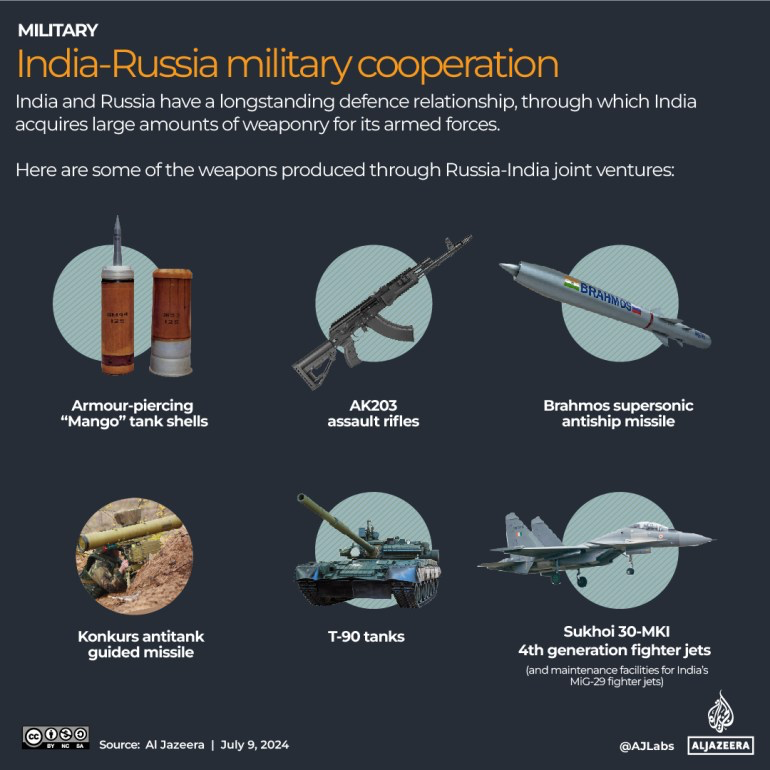
▪ Su-30 MKI
▪ MiG-29
▪ T-90 tanks
▪ INS Vikramaditya
▪ Nuclear submarine leasing - Joint Development & Co-Production
★ BrahMos missile system (flagship success)
★ AK-203 rifle manufacturing in India
★ Technology transfer culture stronger than with Western partners
- Scale of Defence Cooperation
BUT STLL: Russia remains India’s most willing partner in sensitive defence technologies.
- Recent Challenges
★ Delays in spare parts due to sanctions
★ Payment mechanisms disrupted
★ Supply chain adjustments required
3.2 ENERGY COOPERATION
-
- Russia emerged as one of India’s top crude oil suppliers post-Ukraine war
- India imports discounted Russian oil:
▪ Supports energy security
▪ Controls inflation
Other areas:
- Nuclear energy (Kudankulam)
- LNG cooperation
- Arctic energy discussions
India’s energy engagement with Russia reflects pragmatic realism, not political endorsement.
3.3 NUCLEAR & SPACE COOPERATION
- Civil nuclear cooperation:
▪ Kudankulam Nuclear Power Plant - Space cooperation:
▪ Satellite navigation
▪ Training support
3.4 MULTILATERAL COOPERATION
- India and Russia cooperate in:
▪ BRICS
▪ SCO
▪ RIC (Russia-India-China)
▪ G20 - Shared interest in:
▪ Multipolar world
▪ Reform of Western-dominated institutions
4. IMPACT OF UKRAINE WAR ON INDIA–RUSSIA RELATIONS
4.1 India’s Position
- India has :
★ Abstained on UN resolutions
★ Called for:
▪ Immediate cessation of violence
▪ Respect for sovereignty
▪ Dialogue and diplomacy - India avoids :
★ Explicit condemnation
★ Alignment with Western sanctions
4.2 Western Pressure vs Indian Interests
- US and Europe pressed India to :
▪ Reduce defence ties
▪ Cut energy imports - India prioritised :
▪ National interest
▪ Energy security
▪ Defence readiness
5. CHALLENGES IN INDIA–RUSSIA RELATIONS
5.1 Russia–China Proximity
- Russia’s growing dependence on China post-sanctions
- Risk of:
▪ Reduced Russian sensitivity to Indian concerns
▪ Strategic imbalance in RIC format
5.2 Reliability Concerns
- Delays in defence supplies
- Over-dependence risk
- Need for diversification
5.3 Global Image Costs
- Engagement with Russia draws Western criticism
- India balances optics with interests
6. INDIA’S ADAPTIVE STRATEGY
6.1 Defence Diversification
- Increasing procurement from :
▪ US
▪ France
▪ Israel - At the same time :
▪ Retaining core Russian platforms
6.2 Diplomatic Balancing
- Maintaining Russia ties
- Deepening US partnership
- Avoiding bloc politics
6.3 Economic & Payment Innovations
- Exploring :
▪ Rupee-Rouble trade
▪ Alternative payment systems - Overcoming sanctions-related hurdles
7. STRATEGIC SIGNIFICANCE FOR INDIA
India–Russia relations help India :
- 1. Preserve strategic autonomy
- 2. Ensure defence preparedness
- 3. Secure affordable energy
- 4. Maintain multipolar balance
But India must :
- Manage Russia-China convergence
- Reduce over-dependence
8. EXAM RELEVANCE
PYQs
- 2014 – India–Russia relations
- 2022 – Ukraine war & India’s stance
9. CONCLUSION
India–Russia relations are rooted in historical trust and strategic necessity. While global geopolitics and Russia’s growing proximity to China pose challenges, India continues to recalibrate the partnership to preserve its strategic autonomy while diversifying its external engagements.